
Introduction
A modern office is no longer just a place to work—it’s a space that shapes focus, energy, and overall happiness. In today’s interior design landscape, companies are rethinking how their workplace supports people, not just processes. Whether you are planning a full remodel or refining an existing layout, the goal is to create an environment that feels natural, flexible, and comfortable to use every day.
Practical Ways to Create an Inspiring Modern Office
1. Start with How People Actually Work
Before choosing finishes or furniture, take time to understand daily habits. A modern office should support different ways of working—focused tasks, collaboration, quick meetings, and informal conversations.
Instead of filling the space with identical desks, consider a mix of settings. Quiet zones for concentration, shared tables for teamwork, and casual seating areas can all exist within the same office arrangement. This flexibility is one of the most important shifts in contemporary office design.
2. Make Layout and Flow Feel Natural
A good office arrangement should feel intuitive. People shouldn’t have to think about where to go—they should move easily between tasks. Circulation paths, desk placement, and shared areas all play a role in shaping this flow.
Open layouts often work well, but they need balance. Too much openness can create noise and distraction, while too many enclosed spaces can feel restrictive. The key is to create a rhythm between open and defined areas, something often seen in well-executed corporate office design.
3. Use Light to Improve Mood and Productivity
Light has a direct impact on happiness and energy levels. Natural light should always be prioritized where possible—desks placed near windows, glass partitions instead of solid walls, and minimal obstructions.
For artificial lighting, avoid harsh overhead-only solutions. Layered lighting—ambient, task, and accent—creates a more comfortable and adaptable environment. In interior design, this approach is essential for building a modern office that feels both functional and inviting.
4. Design for Comfort, Not Just Appearance
Comfort is often underestimated in office design. Ergonomic chairs, adjustable desks, and supportive seating can significantly improve daily experience.
Interestingly, ideas from bedroom design—such as soft textures, calming tones, and layered materials—are now influencing office spaces. This shift reflects a broader move toward environments that feel less rigid and more human-centered.
5. Introduce Materials That Feel Real and Grounded
Modern office interiors benefit from a mix of materials. Wood, fabric, metal, and stone can be combined to create depth without overwhelming the space.
In contemporary interior design, overly polished surfaces are often replaced with warmer, more tactile finishes. This helps the office feel less corporate and more approachable, which can positively affect mood and engagement.
6. Support Wellbeing and Everyday Happiness
An inspiring office is one that supports both productivity and wellbeing. Simple additions—such as breakout areas, greenery, or access to fresh air—can make a noticeable difference.
Spaces for short breaks, informal meetings, or even quiet moments help people reset during the day. These elements don’t need to be large or expensive; they just need to be thoughtfully integrated into the overall design.
7. Keep the Design Flexible for the Future
Work patterns continue to evolve, so flexibility is essential. Modular furniture, adaptable layouts, and multi-use spaces allow the office to change over time without requiring a full remodel.
This approach is especially useful in modern office planning, where team sizes and working styles may shift frequently. Designing with change in mind ensures the space remains relevant and functional.
8. Reflect Identity Without Overbranding
A strong office should reflect the company’s identity, but in a subtle way. Instead of relying only on logos or bold colors, use materials, lighting, and layout to express the brand.
In corporate office design, this often means creating a consistent tone rather than a loud statement. The result feels more natural and less forced, which contributes to a more comfortable working environment.
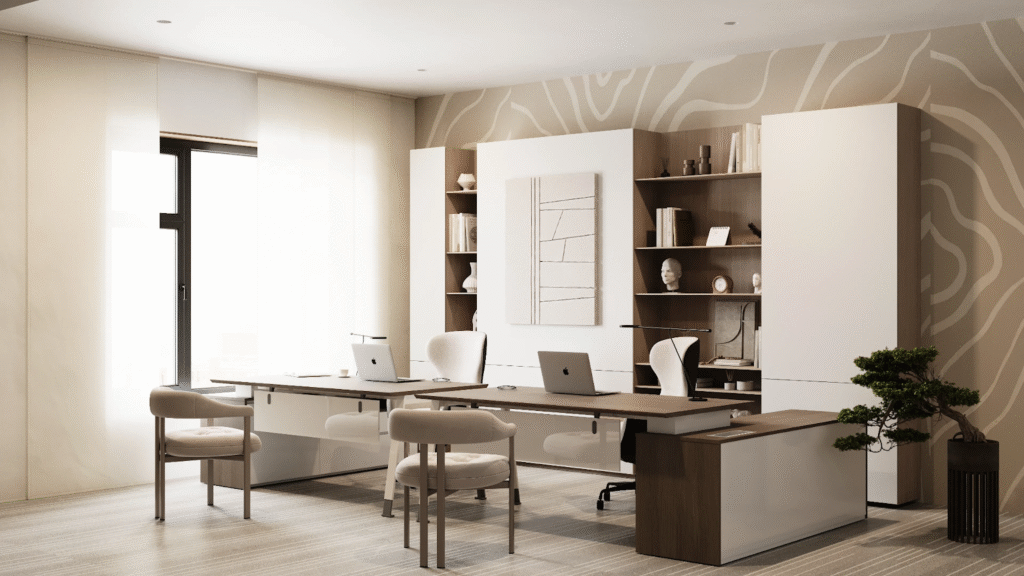
At EClife, we often approach office design with a simple idea: a well-designed space should quietly improve how people feel and perform. From corporate office design to smaller creative studios, the most successful workplaces are those that balance function with atmosphere, without overcomplicating the experience.
Conclusion
A modern office doesn’t need to try too hard to feel inspiring. When the layout makes sense, the light feels right, and the space allows people to move and work without friction, everything else follows naturally. This is where good office design becomes almost invisible—it supports the day without demanding attention.
The difference is often subtle. A well-placed desk, a quieter corner, a shift in materials—these small decisions shape how a space is experienced over time. In many ways, designing a modern office is closer to editing than adding: removing what doesn’t work, refining what does, and leaving room for change.
Whether it’s a full corporate office design project or a smaller remodel, the most lasting results come from spaces that feel calm, adaptable, and genuinely human. That’s the kind of environment EClife aims to create—one that doesn’t just look contemporary, but continues to work quietly in the background, day after day.