A living room earns its keep by the hour, not the year. It hosts long movies, short naps, quick calls, and the slow decompression that follows a long day. When the seat at the center of that room gets it right, the whole home feels calmer. A leather sofa recliner earns its place by doing exactly that. It softens the moment you sit down, supports the moment you lean back, and holds its shape through years of daily use. This guide keeps things straightforward. No jargon, no filler. Just what a modern leather sofa recliner should feel like, what it should be made of, and how to choose one that fits your home, your posture, and the rhythm of your evenings without swallowing the room.
What Sets a Leather Recliner Apart
Leather ages in a way that fabric cannot. It softens without falling apart, deepens in tone with sunlight, and shrugs off the small spills that end other upholstery. On a recliner, that matters more than on a fixed sofa. Reclining frames flex thousands of times a year, so the cover has to move with the motion instead of stretching, sagging, or splitting at the seams. Full-grain and top-grain hides have the tight fiber structure that keeps their form through that constant motion. Paired with a well-built frame, a real hide cover becomes the reason a piece still feels good in year ten.
Comfort is the other half of the equation. A good leather sofa recliner is not just a chair that leans. It supports the lower back when you sit upright, keeps the knees level when you extend the footrest, and cradles the neck when you lie all the way back. That range of positions is what turns a sofa into a place where you actually rest, rather than a place where you slouch until you give up and go to bed.
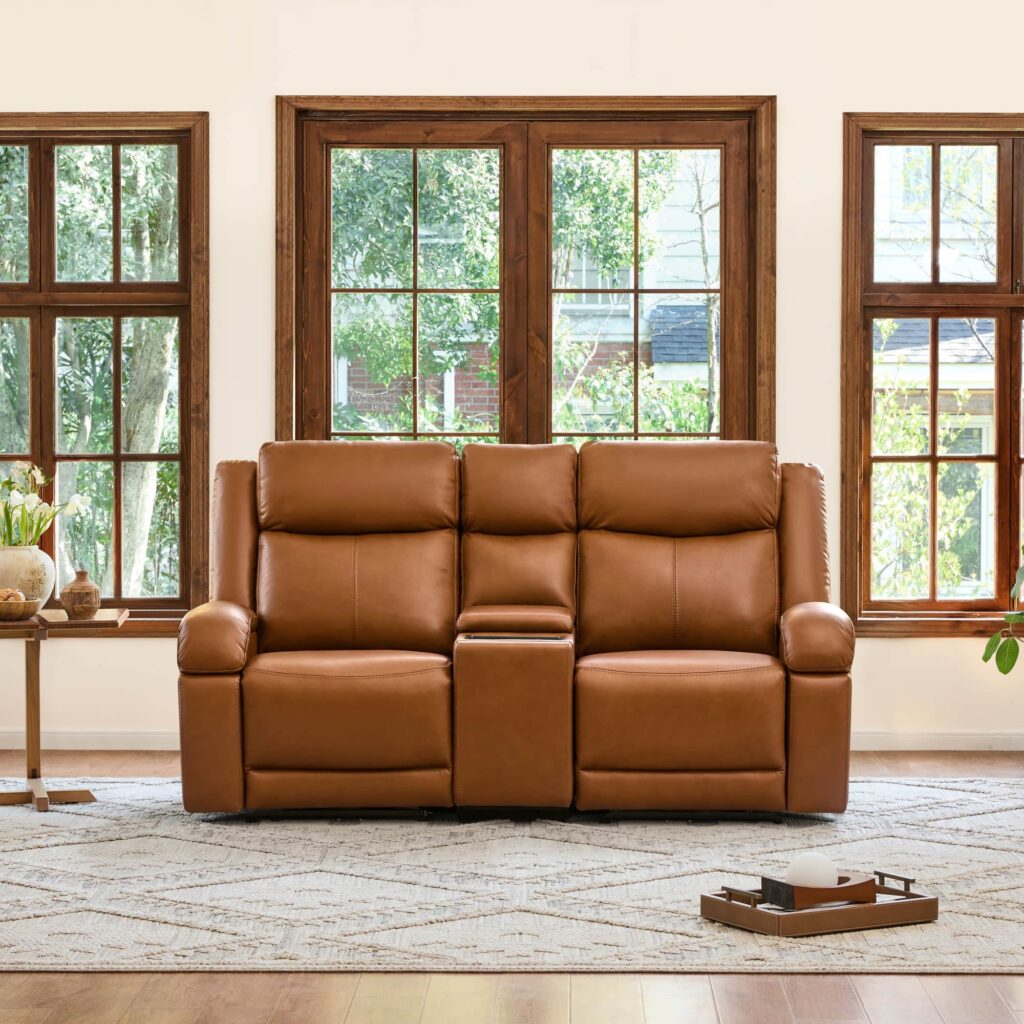
Frame, Foam, and the Parts You Never See
Every recliner lives or dies by its interior. The frame carries the weight of the sitter and the pull of the mechanism, so it has to be built from kiln-dried hardwood and reinforced at the joints. Anything less will loosen after a season of nightly use. Underneath the cover, high-resilience foam holds up better than the soft, quick-collapse padding found in cheaper pieces. Layered densities work best. A firmer base keeps the cushion from bottoming out. A softer top layer meets the body without pressure points. Together, they give the seat the give-and-return feel that makes a long movie feel short.
The reclining mechanism is the last piece of the puzzle. Manual levers still work well, but power recline has become the standard for a reason. It lets the sitter dial in an exact angle, adjust the headrest independently, and return to upright without leaning forward or bracing against the arms. That matters for anyone with back stiffness, for tall sitters who need a longer footrest, and for anyone who wants to fall asleep on the sofa without waking up sore.
Space, Wall Clearance, and Real Rooms
Most living rooms are not oversized. A traditional recliner needs a foot or more of open space behind it to tilt back, which pushes the whole sofa away from the wall and eats floor space that the room cannot spare. Wall-hugger designs solve that. Instead of pivoting backward, the seat slides forward on a track and the back tilts in place. The result is a full recline in a fraction of the footprint, so the sofa can sit against the wall the way a normal sofa would. For apartments, condos, and open-plan living rooms where every inch of walkway matters, that difference decides whether a recliner works at all.
Measuring the room before the delivery is worth the ten minutes it takes. Note the wall length, the distance to the nearest table or bookshelf, the width of the doorways, and the space in front of the sofa where the footrest will extend. A recliner that fits the wall but blocks the coffee table is not a recliner that fits the room. Plan for the fully open position, not the seated one, and the piece will feel generous instead of crowded.
Style That Works in the Room You Already Have
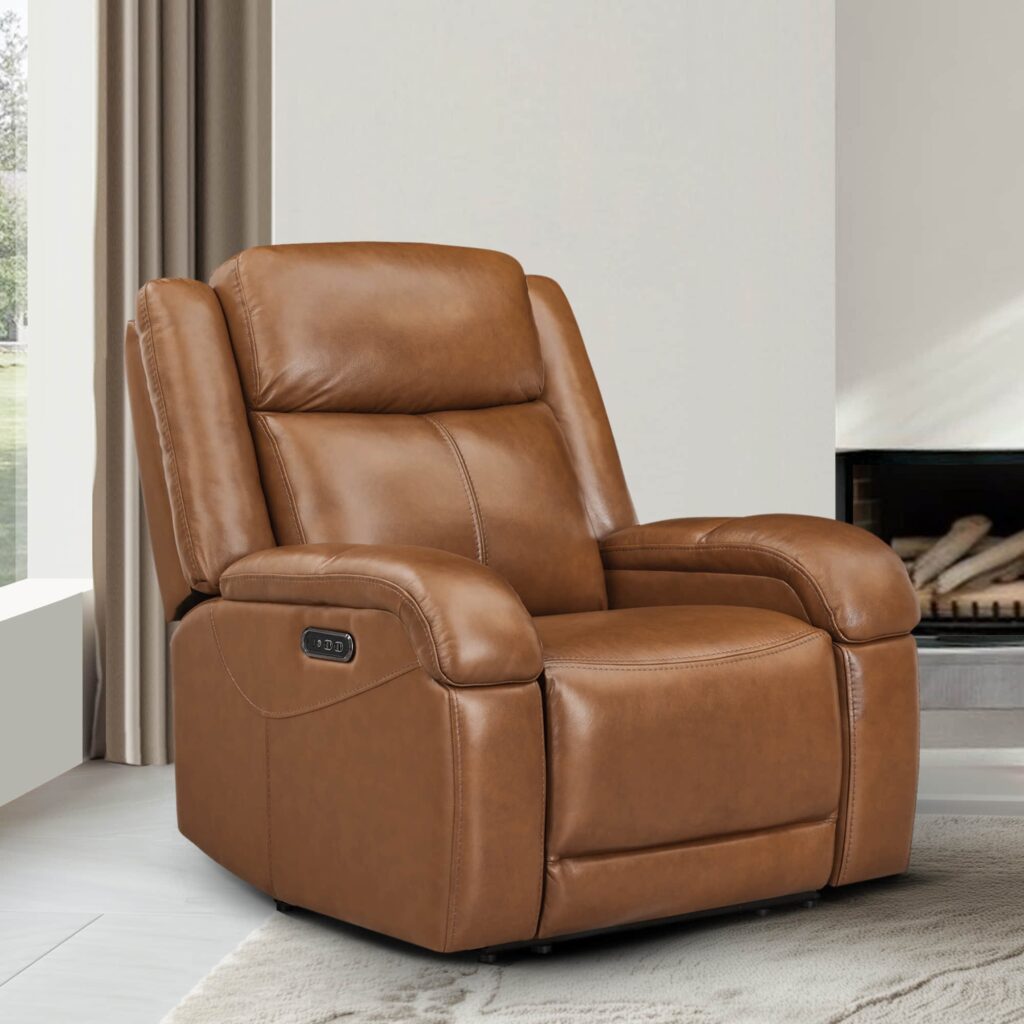
Leather has a reputation for looking heavy, but modern silhouettes have changed that. Tapered arms, lower profiles, and clean stitching make a leather recliner look like part of the room instead of a bulky add-on. Neutral hides in saddle, chestnut, and warm cognac lean traditional and pair well with wood floors, wool rugs, and mixed-material coffee tables. Cooler tones in charcoal or slate lean modern and sit comfortably next to metal, glass, and stone. Neither direction is wrong. The right choice is the one that agrees with the room already in front of you.
Details do the rest of the work. Contrast stitching adds a hint of tailoring. Piped edges sharpen the outline. A single power button tucked into the arm keeps the technology invisible when the sofa is closed. CHITA LIVING leans on these small choices to make its pieces feel more like living-room furniture and less like recliner-chair-in-sofa-form. That is a distinction worth caring about, because the goal is a sofa that reclines, not a recliner pretending to be a sofa.
Living With Leather Long Term
Leather is easier to live with than most people expect. It does not attract dust the way woven fabric does. Crumbs brush off. Light spills wipe away with a soft cloth. The only real routine is a periodic conditioner to keep the hide from drying out, especially in rooms that get long stretches of direct sun or run dry through winter heating. That is a five-minute job a couple of times a year, and it pays back in a cover that stays supple through the life of the frame.
Pets, kids, and general daily life all leave marks on furniture. Leather takes those marks and turns them into something. A softer sheen on the seat, a gentler patina on the arms, a subtle memory of everyone who used the sofa. Fabric collects wear as damage. Real hide collects wear as character. Over the years, that shift is what makes a leather recliner feel like part of the home instead of a piece of stock furniture waiting to be replaced.
Extras That Are Actually Worth It
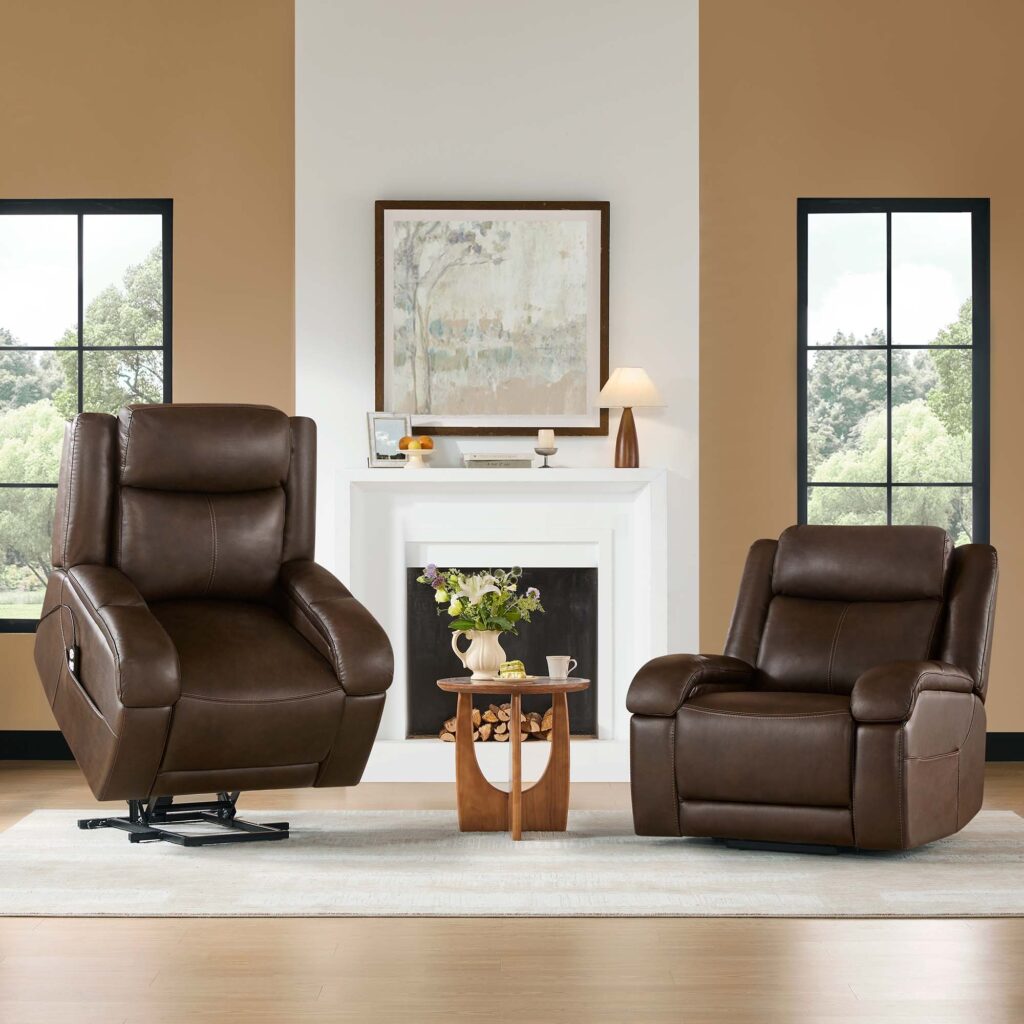
Feature lists on recliners can get long, but only a few extras change how the piece feels day to day. A power headrest is one of them. Independent headrest control means the difference between reading upright and napping fully reclined without shifting positions. Heat and massage functions sound gimmicky until a long day makes them the reason the sofa is the first stop after the front door. USB charging built into the arm sounds minor until it replaces the tangle of cables under the coffee table. None of these features are essential, but each one earns its keep when it is used.
The features that do not earn their keep are worth naming too. Ornate carved bases, aggressive contrast piping, and heavy visible hardware date a piece quickly. A recliner that looks understated in the showroom will still look understated in five years. A recliner covered in decorative flourishes will look tired long before the frame does. Choose for the shape and the leather. Let the reclining function be the thing that surprises guests, not the design.
Making the Right Call
Buying a leather sofa recliner is not a purchase to rush. Sit in it if you can. Recline all the way back. Sit forward. Get up. Sit down again. Pay attention to how the seat catches you, how the footrest hits your calves, how the headrest lines up with your neck. If those points feel right, the rest of the piece will hold up. Trust that first impression more than the spec sheet. A recliner that fits your body will feel obvious. A recliner that does not will keep almost feeling right for years, which is worse than not feeling right at all.
The Seat That Anchors the Room
Furniture is a long conversation with the way you live. A good leather sofa recliner joins that conversation quietly. It supports your posture without a fuss, wears in without wearing out, and reclines when you need it to without taking over the room. Choose a real hide, a serious frame, a mechanism you trust, and a silhouette that agrees with the space it will live in. Give it a few weeks. It will start to feel like the seat everyone drifts toward at the end of the day, which is exactly the job a great sofa is supposed to do.